Dr. Mona Dahiya - Recurrent Implantation Failure Treatment

Second Opinion For Failed IVF Transfers

Recurrent Implantation Failure Treatment in Delhi, Noida & Ghaziabad

RIF treatment in Delhi | Noida | Ghaziabad

Failed IVF implantation in Delhi
IVF failure second opinion in Noida
Failure of embryo transfer in Ghaziabad
Failure of IVF second opinion
0+

Families Helped

0+

Years Experience

0%+

Success In IVF*

0+

IVF Done

Registered Medical Practitioner

Medical Council Registration Numbers

Dr. Mona Dahiya is a registered fertility doctor.

DMC

Delhi Medical Council

DMC-7795

Registration number

MCI

Medical Council of India

MCI-09/6820

Registration number

UPMC

Uttar Pradesh Medical Council

UPMC-110541

Registration number

Video Insights

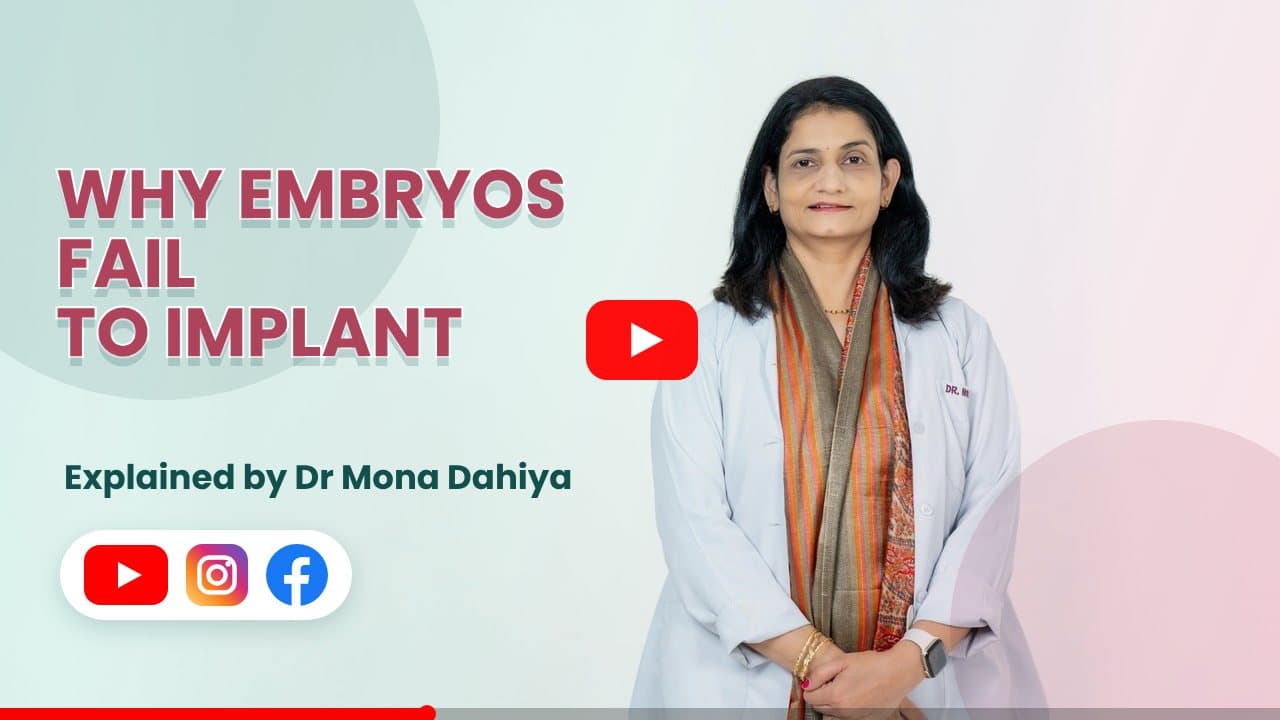
Recurrent Implantation Failure: Causes & Solutions Explained

Dr. Mona Dahiya explaining why embryos fail to implant and RIF solutions

Also watch on YouTube and Instagram

About Recurrent Implantation Failure (RIF)

What Is Recurrent Implantation Failure (RIF)?

Recurrent Implantation Failure (RIF)

RIF is when there is no pregnancy after transfer of more than 2 blastocyst of good grade. 10%-15% of patients who undergo IVF will experience RIF. More than 50% are due to chromosomal abnormality in embryo (with PGT-A we can achieve 65%-70% pregnancy) and rest 25%-30% are due to shift in window of implantation (can be detected with ERA) or other causes such as chronic endometritis or thin lining less than 7mm.

Reasons For Recurrent Implantation Failure (RIF)

Indications: Who Needs a RIF Evaluation?

Some of the common indications to consult Dr Mona Dahiya for recurrent implantation failure (RIF) are.

1

Failure of more than one transfer

Transfer of embryo(s) with good quality that did not result in pregnancy.
2

Embryos failing to grow

Low number of blastocyst formation.
3

Possible Uterus factor

Polyp, septum, adhesion or thin lining.
4

High maternal age

Embryos may have chromosomal abnormalities.
5

Unknown cause

No obvious cause found.

Test To Diagnose Recurrent Implantation Failure (RIF)

Diagnostic Checklist

We suggest these tests to diagnose Recurrent Implantation Failure (RIF). Not everyone will require all the tests.

Check all the previous data on stimulation, embryo grading and transfer technique
Cavity study with hysteroscopy and 3D USG
Test for chronic endometritis, thyroid and other metabolic issues
Only if required Coagulation and immune workup
Check sperm parameters and sperm DNA fragmentation

Our Approach Towards Recurrent Implantation Failure (RIF)

Step-by-Step Treatment Protocol

Below is our approach towards treating Recurrent Implantation Failure (RIF).
1

Evaluate Previous Data

↳
Data from all previous cycles
↳
Quality of embryos and transfer technique
2

Evaluate Uterus

↳
Hysteroscopy to correct polyp, septum or adhesion
↳
Cure any infection or inflammation of the endometrium
3

Evaluate Embryos

↳
PGT-A may be done
↳
Evaluate the lab practice
4

Plan Embryo Transfer

↳
Based on your requirement we will decide on protocol
↳
Transfer single best quality blastocyst
5

Luteal Support

↳
Will provide proven luteal support
↳
Beta HCG and scanning
Recurrent Implantation Failure Evaluation and Care

Consult With Dr Mona Dahiya For Recurrent Implantation Failure (RIF)

Why Consult Dr. Mona Dahiya for Recurrent Implantation Failure?

100% Cost Transparency

We do tests and addons only when there is an indication.

360-Degree Evaluation

Comprehensive evaluation: Embryo, Uterus to Male factor and Timing of Transfer

IVF Failure Desk

Helping couples with previous failed IVF.

Delhi - Building Number 41, First Floor, Ring Road, Block Q, Lajpat Nagar IV, Lajpat Nagar, New Delhi 110024

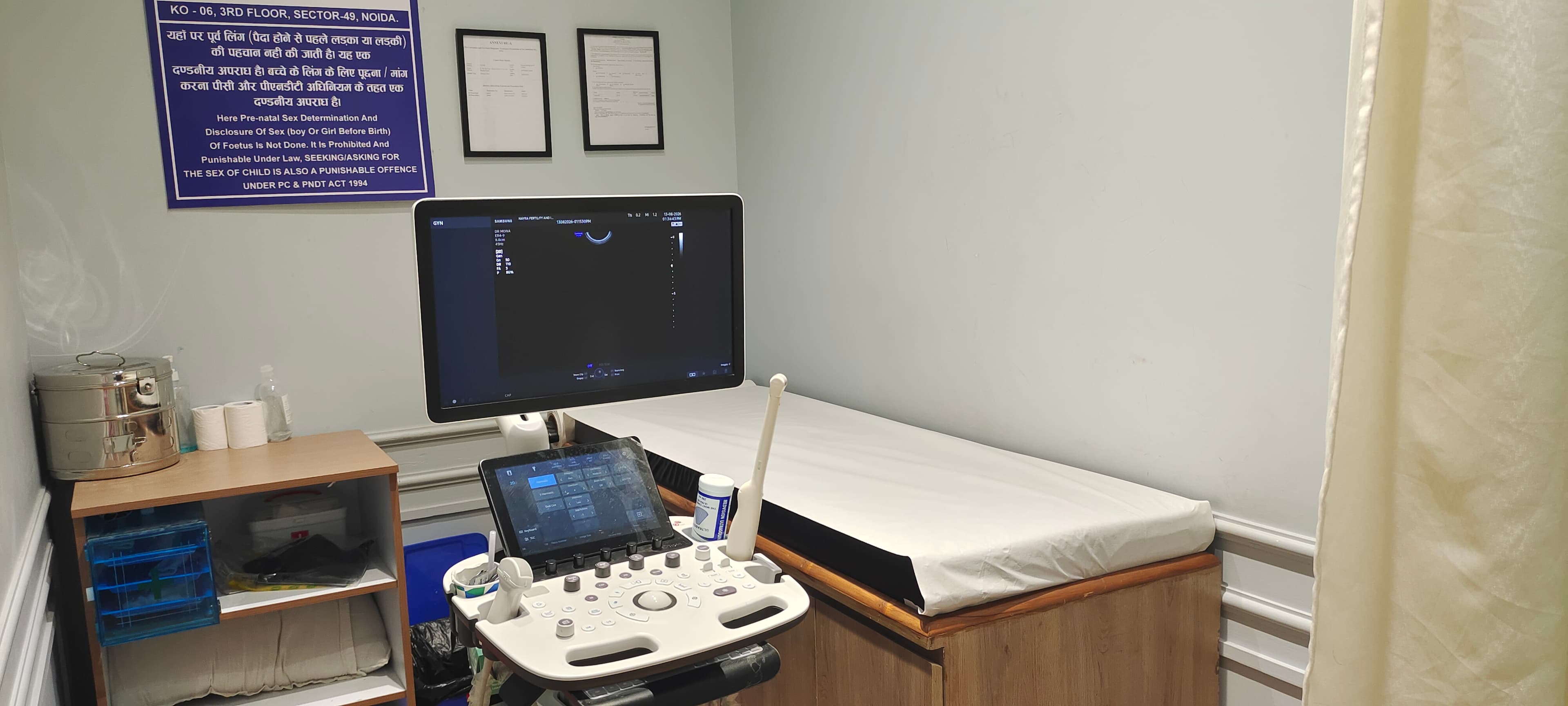
Noida - 3rd Floor, K-06, above FirstCry, Garaula, Sector 49, Noida, Uttar Pradesh 201301

Ghaziabad - 2nd Floor, RDC, C-53A, near Bikanerwala, Sector 15, Sector 10, Raj Nagar, Ghaziabad, Uttar Pradesh 201002

Case Study

Clinical Case Insight

After three failed transfers patient underwent hysteroscopy and was found to have a septum. She achieved an ongoing pregnancy after FET of one blastocyst once corrected.

This is for educational purposes. Details have been modified for confidentiality.

Break Up Of Cost For Recurrent Implantation Failure (RIF)

Cost Factors Breakdown

Cost will depend on the tests and addons that you opt for. We will recommend what can help you in your case.

Basic Workup

Hysteroscopy, USG and blood work

Genetic Tests

PGT-A if indicated

Frozen Transfer

Drugs and preparation for frozen transfer

Addons

If indicated

Consultation for Recurrent Implantation Failure

Book a Consultation at Our Clinics

We have clinics in Noida, Ghaziabad and Delhi. Can also consult you online.

Questions About Recurrent Implantation Failure (RIF)

Frequently Asked Questions about Recurrent Implantation Failure

RIF is defined as no clinical pregnancy (presence of gestation sac on ultrasound) after transfer of more than 3 good grade embryos (cleavage stage) or 2 or more top quality blastocysts. Approximately 10%-15% of couples will suffer from RIF. Advanced workup is required to find the cause of RIF.
Embryos that have chromosomal abnormality is responsible for more than 50%-60% of failed implantation. Even if the embryo looks normal under microscope it can be chromosomally abnormal. In females greater than 35 years of age more than 50% of blastocysts can be abnormal. If we can do PGT-A and transfer a euploid blastocyst then we can achieve pregnancy in 65%-70% of cases. Miscarriage will reduce to less than 10%.
In about 25%-30% of women who fail to get pregnant the window of implantation is shifted. They may be pre receptive (require more time under progesterone exposure 12-24 hrs) or post receptive. ERA test using next generation sequencing on 248 genes will help us find out their exact window of implantation. This allows us to perform personalized FET and achieve pregnancy in 55%-65% of cases.
Chronic Endometritis is an asymptomatic inflammation of the endometrium that is found in 30%-40% of patients with RIF. This is often overlooked and can be diagnosed by doing biopsy and CD138 stain. Oral antibiotics can treat this infection in 85%-90% of cases which increases the chance of implantation in future transfers.
If your endometrial lining is less than 7mm with no trilaminar pattern on the day of progesterone you are less likely to get pregnant. The chance of implantation decreases to 20%-25%. You can treat thin lining by extending the course of oral/trans dermal estrogen and vaginal sildenafil. Another option is PRP infusion which can increase your endometrial thickness by 1.5mm-2.5mm within 48-72 hours. You can also do hysteroscopy to lyse any adhesions or scar tissue that is preventing your lining from growing.

You should check for the following causes after failing your IVF transfer:

  • Do Karyotype of both partners. And do PGT-A if you have any leftover embryos.
  • Check your uterus with 3D USG or hysteroscopy for any anomalies.
  • Check for chronic endometritis by biopsy. Do ERA and EndomeTRIO.
  • Check male factor with sperm DNA fragmentation index. And check for clotting profile if indicated.
Yes. Having a hydrosalpinx decreases your chance of getting pregnant by 50% and can also cause miscarriages. The fluid present inside the tube is toxic to the embryo and will reduce your implantation. This can be fixed by doing clipping or removal of tube before transfer.
Approximately 10%-15% of women can have clotting problems or auto immune problems that can cause RIF. These problems can block the small blood vessels which supply your endometrium causing your embryo to fail. By taking aspirin and injections you can increase your chances of implantation.
Once you have identified the cause of your problem. You have a 60%-70% chance of success per transfer. You have more than 90% chance of becoming pregnant after 3 euploid transfers.
Laser assisted hatching can be done in case of frozen transfer or in patients with older age group. Sometimes your embryo has difficulty breaking through its outer layer. By doing LAH you can increase your chance of implantation by 10%-15%.
Next step

Book an In-Clinic or Online Consultation

Book an in-clinic consultation with Dr. Mona Dahiya in South Delhi, Noida or Ghaziabad, or schedule an online consultation to review your cycle history.

Indian Nationals
₹1,000

Online consultation

Foreign Patients
US$25

Online consultation

Delhi Building Number 41, First Floor, Ring Road, Block Q, Lajpat Nagar IV, Lajpat Nagar, New Delhi 110024
Noida 3rd Floor, K-06, above FirstCry, Baraula, Sector 49, Noida, Uttar Pradesh 201301
Ghaziabad 2nd Floor, RDC, C-53A, near Bikanerwala, Sector 15, Sector 10, Raj Nagar, Ghaziabad, Uttar Pradesh 201002

Request an appointment

🇮🇳+91
Newborn baby cradled gently in hands

Take your first step towards parenthood with Dr. Mona Dahiya